
Blog Posts
Are Quartz Countertops Worth It? (2026 Review)
QUICK ANSWER
Quartz is worth considering when you want a nonporous countertop that needs no sealing and offers many design options. It still requires cleaning and heat protection, and color and pattern can vary between slabs. Natural stone may suit you better if a unique stone surface is the priority. Compare actual slabs, seam placement, care requirements and the complete fabrication quote.
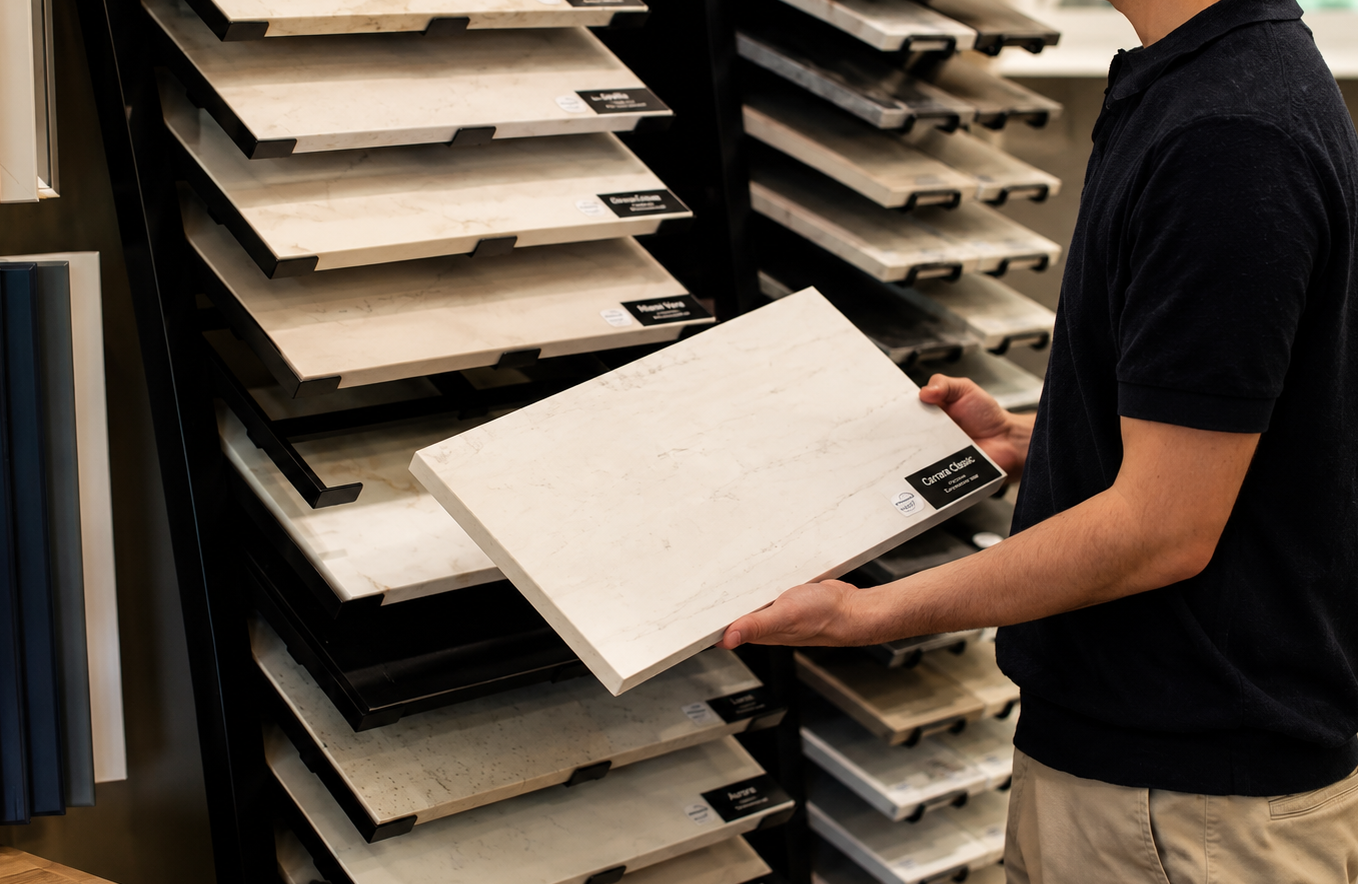
A Straight Answer on Quartz Countertops
Quartz has become the go-to countertop for a reason — but that doesn’t mean it’s the right fit for every project.
If you’re planning a kitchen or bath remodel, quartz will be at the top of almost every material list. It’s engineered from ground natural quartz bound with resin, which makes it hard, non-porous, and remarkably low-maintenance. The real question is whether quartz is worth it for your budget, your design, and how you actually use your space. Here’s an honest look based on what we design and supply across Kalamazoo, Portage, St. Joseph, and Southwest Michigan.
What Exactly Is Quartz?
Engineered quartz combines mineral content with binders to create a nonporous surface that does not require sealing. Patterns and colors can still vary between slabs, and seams remain visible. Review the chosen slab, veining direction and proposed seam locations before fabrication.
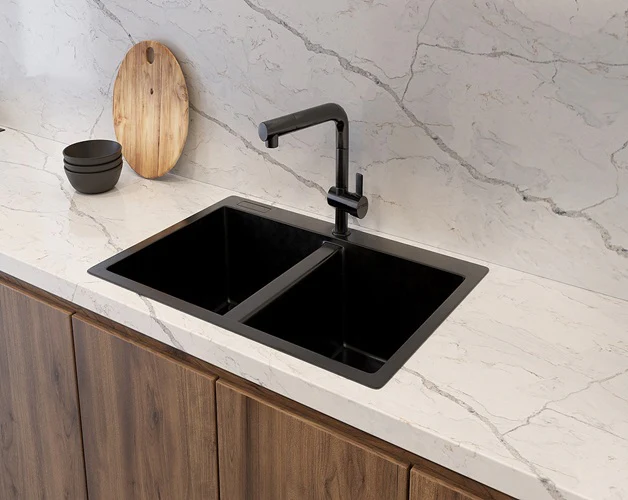
Quartz vs. Granite vs. Marble
| Material | Maintenance | Durability | Look | Relative Cost |
|---|---|---|---|---|
| Quartz Most popular | Very low, no sealing | Excellent | Consistent, wide range | $$–$$$ |
| Granite | Needs periodic sealing | Excellent | Natural, unique | $$–$$$ |
| Marble | High, stains & etches | Softer | Luxury, classic | $$$ |
Why Quartz Works So Well for Busy Households
Quartz is resistant to many everyday stains and easy to clean, but it still needs routine cleaning and prompt spill removal. Use a cutting board and heat protection. Nonporous does not mean self-cleaning or immune to damage.
Brands We Carry
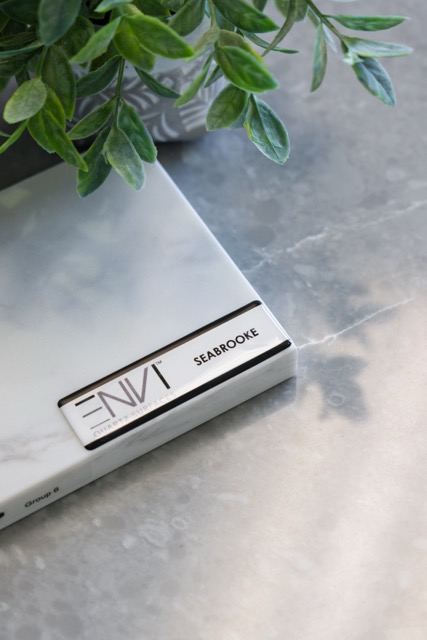
Explore the current Hannapel countertop selection and confirm brand, color and sample availability with your showroom. Coordinate the surface with your cabinetry options or bathroom vanity before finalizing the order.
Where Quartz Stands Out
✓ Strengths
- Non-porous — no sealing ever required
- Excellent stain and scratch resistance
- Consistent color and pattern selection
- Low-maintenance and easy to clean
✗ Tradeoffs
- Can be damaged by excessive heat — use trivets
- Not quite the one-of-a-kind look of natural stone
- Premium designer lines can get pricey
Caring for Quartz Countertops
Follow the care instructions for your selected brand and finish. Use heat protection under hot cookware and heat-producing appliances, and avoid cleaners or abrasives the manufacturer excludes. Cambria’s care guide also explains visible seams and heat-related damage.
What Do Quartz Countertops Cost in Southwest Michigan?
These installed square-foot ranges are early planning allowances, not current quotes. Confirm whether templating, fabrication, edge treatment, sink and cooktop cutouts, removal, delivery, plumbing reconnection and tax are included:
- Standard colors & patterns$55 – $75 / sq ft
- Mid-range designer lines$75 – $100 / sq ft
- Premium & high-end veining$100 – $150+ / sq ft
Your final cost depends on the brand, color, edge profile, square footage, and installation complexity.
Are Quartz Countertops Worth It?
For most homeowners, yes. If you want a durable, beautiful surface that stays looking new with almost no effort, quartz is hard to beat. If your heart is set on the truly unique, natural veining of marble or exotic granite — and you’re willing to maintain it — natural stone may still be your pick.
Who Should Choose Quartz
Quartz is ideal for busy kitchens, families, and anyone who wants a high-end look without ongoing upkeep. If maximum uniqueness matters more than maintenance, compare natural stone options too.
Final Thoughts
Quartz has earned its spot as the most popular countertop material by delivering looks, durability, and easy care in one surface. The best next step is to see full slabs and colors in person and hold samples against your cabinets and flooring.
See Quartz Countertops in Person
FAQ
Do quartz countertops need to be sealed?
No. Quartz is non-porous, so unlike granite or marble it never needs sealing — just wipe it clean with mild soap and water.
Can you put hot pans on quartz?
It’s best not to. Quartz resists heat but sudden or extreme heat can damage the resin, so always use a trivet or hot pad.
Is quartz better than granite?
It depends on your priorities. Quartz wins on low maintenance and color consistency; granite offers a unique, all-natural look but needs periodic sealing.
How long do quartz countertops last?
With normal care, quartz countertops can last for decades and typically come with strong manufacturer warranties.