
Blog Posts
Window Condensation: Inside, Outside or Between the Panes?
Quick answer
Condensation on the inside of a window usually means indoor humidity is too high for how cold it is outside. Condensation on the outside is dew and clears on its own. Moisture trapped between the panes means the glass seal has failed. Only that last one calls for a repair, and it often means replacing the glass or sash, not the entire window.
Foggy, wet or “sweating” windows are one of the most common questions we hear once the weather turns cold. From across the room, a steamy kitchen window and a failed glass seal can look exactly the same. The fix is completely different, though, and so is the cost.
This guide walks through a simple test to find where the moisture is, what each type of window condensation means, the indoor humidity levels that help prevent it, and how to decide between adjusting the room, repairing the window, or replacing it.
The wipe test: where is the moisture?
Condensation forms when warm, moist air touches a surface that is colder than the air’s dew point. On a window, that can happen in three different places. Figuring out which one you have takes about 30 seconds.
- Wipe the room-side glass with a clean, dry cloth. If the patch stays clear, the moisture was on the inside surface.
- Check the outside glass only if you can reach it safely from the ground or a balcony. No ladder needed for this test.
- If haze remains after both surfaces are dry, the moisture is likely sealed between the panes. Take a photo so a window specialist can confirm it.
On the inside
Wipes away from the room side. Most common in winter, in kitchens, bathrooms and bedrooms.
Adjust humidity and airflow
On the outside
Dew on the weather side, often on cool mornings in spring and fall. Burns off as the day warms.
Normal, no action needed
Between the panes
Can’t be wiped from either side. Often leaves a cloudy film or streaks that come and go.
Failed seal, ask about repair
Have storm windows? The air space between a main window and a separate storm window is not a sealed glass unit. Moisture there is usually an airflow or humidity issue, not a failed seal, so identify the setup before assuming the glass has failed.
Condensation on the inside of windows
Interior condensation is a humidity problem, not a window defect. Glass is usually the coldest surface in a room in winter, so it is the first place extra moisture shows up. Andersen’s interior condensation guidance makes the same point: water on the room-side glass does not, by itself, mean the glass has failed.
Everyday activities add more moisture to indoor air than most people expect:
- Cooking, especially boiling water without the range hood on
- Showers and baths without the exhaust fan running
- A whole-house or room humidifier set too high for the weather
- Drying laundry indoors, houseplants and aquariums
- New construction or a fresh remodel, as drywall, lumber and concrete dry out over the first year
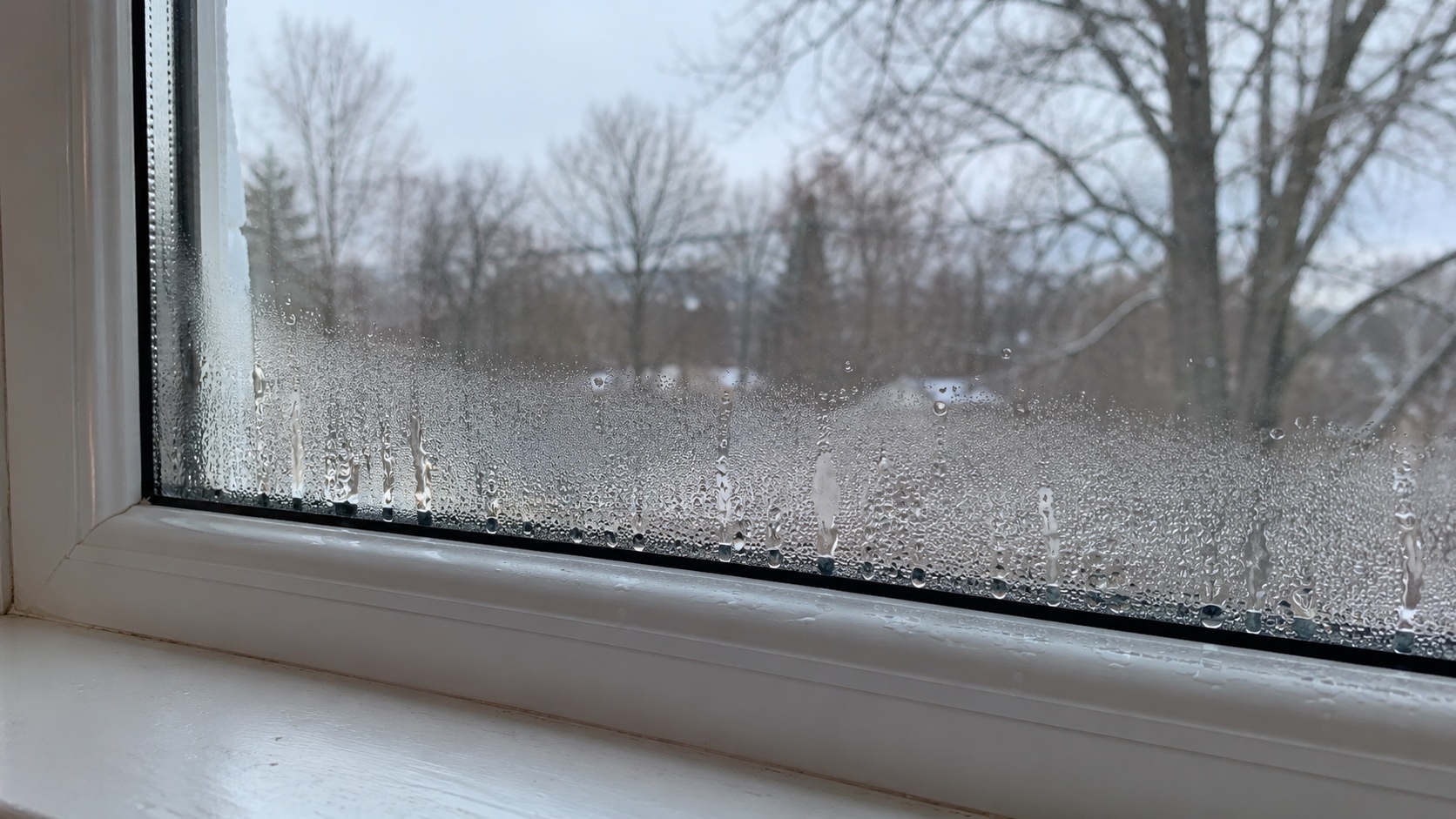
How to stop condensation on the inside of windows
- Run exhaust fans during and for 15 to 20 minutes after showers and cooking. Make sure they actually vent outdoors.
- Lower the humidifier as outdoor temperatures drop. Use the chart below as a starting point.
- Open blinds and curtains during the day so room air can reach and warm the glass.
- Keep air moving. Don’t block heat registers or returns near windows, and use ceiling fans on low.
- Dry wet sills right away and note whether moisture shows up on every window or only one. A single problem window may point to an air leak or water coming in from outside.
Why new windows sometimes get more condensation. Older, drafty windows let humid air leak out and dry winter air leak in. Once tight, energy-efficient windows are installed, the house holds onto more moisture. That is a sign the house is better sealed, but it can mean your ventilation habits need to catch up.
What indoor humidity prevents window condensation?
The EPA recommends keeping indoor humidity below 60%, ideally between 30% and 50%. In cold weather, though, the safe level drops as the temperature outside falls, because the glass gets colder. Here is a widely used winter guideline:
| Outdoor temperature | Keep indoor humidity below |
|---|---|
| 20°F to 40°F | 40% |
| 10°F to 20°F | 35% |
| 0°F to 10°F | 30% |
| -10°F to 0°F | 25% |
| -20°F to -10°F | 20% |
| Below -20°F | 15% |
Sources: Center for Energy and Environment; U.S. EPA.
Treat these numbers as a starting point, not a pass-or-fail test. Insulation, air sealing and window type all change how much humidity a home can hold before the glass fogs. An inexpensive digital hygrometer is the easiest way to see where you are. If humidity stays high no matter what you try, an HVAC professional can check ventilation and humidifier settings.
Condensation on the outside of windows
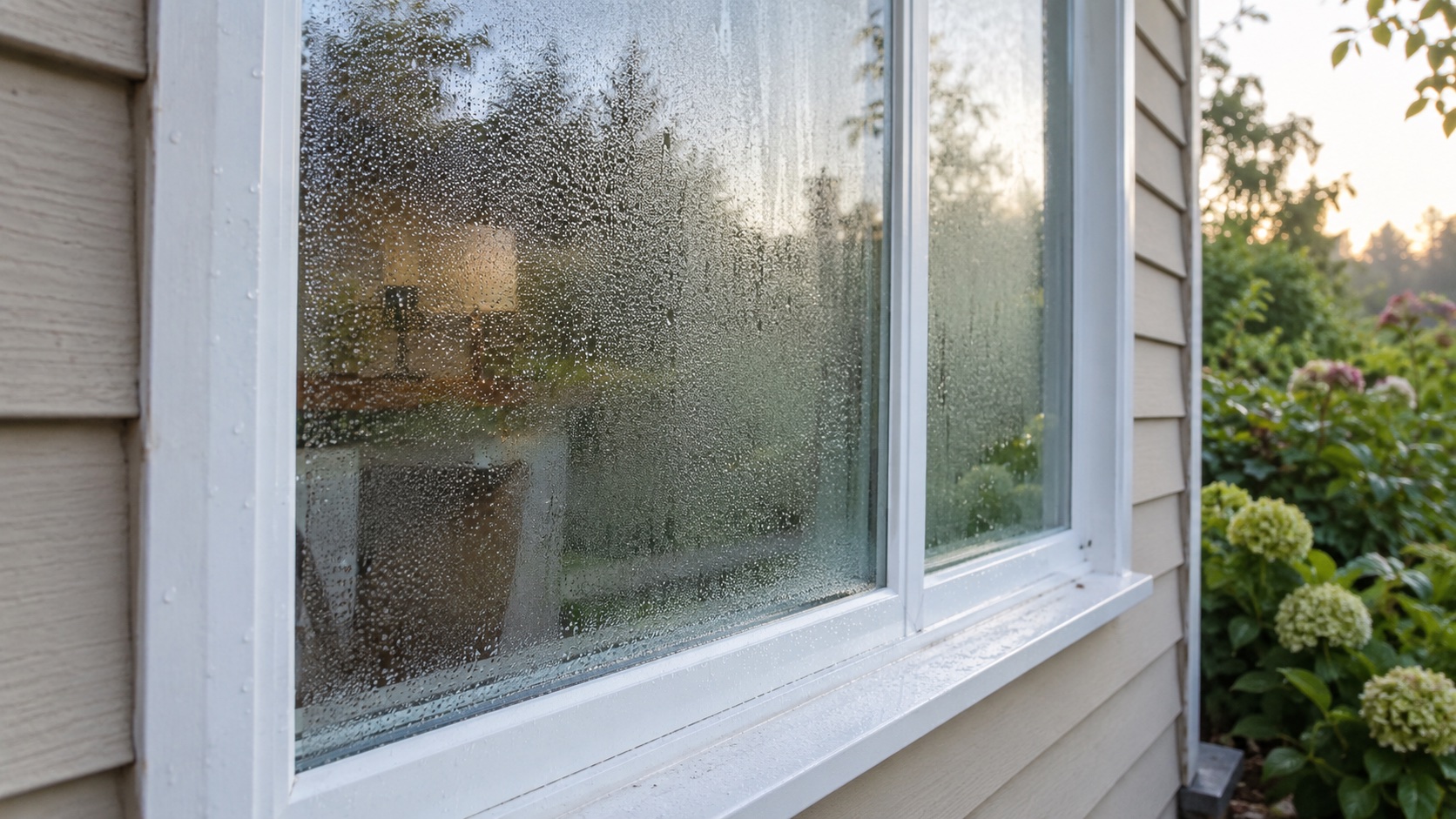
Moisture on the outside of the glass is dew, the same thing that forms on your lawn or car overnight. It shows up when the outer glass cools below the dew point, most often on clear, humid mornings in spring and fall or when a cool night follows a warm day.
It is actually common on energy-efficient windows. According to Andersen, Low-E insulating glass restricts heat flow between the panes, which keeps the outer pane cooler than it would be on older glass. The moisture usually evaporates as the day goes on and does not affect the inside of the home. Neighboring windows may look different depending on sun, shade and wind.
Bottom line: outside condensation alone is never a reason to replace windows.
Condensation between window panes
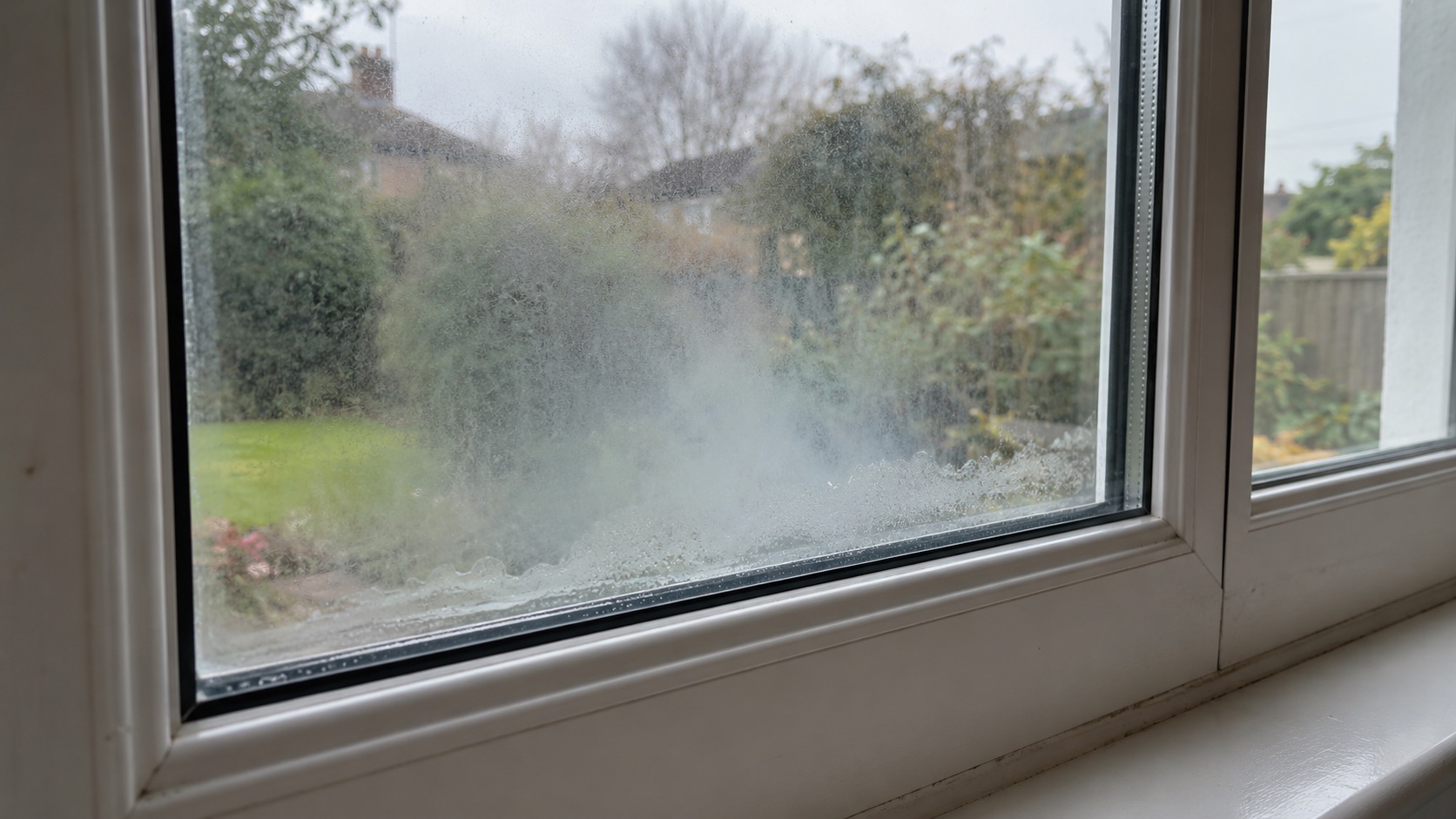
Most modern windows use insulating glass: two or three panes with a sealed space between them, sometimes filled with argon or another insulating gas. When moisture shows up inside that sealed space, the edge seal has failed and humid air has worked its way in. You cannot wipe it away from either side, and it often leaves a milky film or mineral streaks over time.
A failed seal is mostly a visibility and comfort issue. It is not a safety hazard, but it usually won’t get better on its own, and the window may lose some of its insulating performance.
How to fix condensation between panes
A failed seal rarely requires tearing out the whole window. Depending on the brand, series and age, the usual options are:
- Replacement sash or glass unit. Andersen’s condensation guide and service team typically handle glass failures with a new sash (the framed part that holds the glass) or a new patio door panel. Some older direct-set units are exceptions.
- Warranty claim. Many manufacturers cover insulating glass seal failure for years, sometimes for as long as you own the home. Look for a label or etching on the glass spacer and dig up any paperwork before paying for repairs.
- Full window replacement. Worth discussing when the frame is also deteriorating or parts are no longer available.
About “window defogging” services: Some companies drill, clean and vent the glass to clear the haze. That can improve the view, but it does not restore the original seal or gas fill, and it may affect your manufacturer warranty. Check with the manufacturer first. Andersen also advises against applying aftermarket film to its glass, since film can trap heat and raise the risk of cracking.
Repair or replace? A quick guide
| What you see | Likely cause | Next step |
|---|---|---|
| Fog on room-side glass, many windows | High indoor humidity | Ventilate, lower humidifier, monitor with a hygrometer |
| Water on one window only, or after rain | Air leak or water intrusion | Have the window and flashing inspected |
| Dew on the outside in the morning | Normal exterior condensation | No action needed |
| Haze between panes, frame in good shape | Failed insulating glass seal | Check warranty, ask about a sash or glass replacement |
| Haze plus rot, drafts or hard operation | Window near end of life | Get a replacement assessment |
When replacement does make sense, the next decision is how much comes out. Our insert vs. full-frame replacement guide explains what stays and what goes, and our window replacement cost guide is a good place to start budgeting.

What to bring to a window assessment
- Photos of the whole window and a close-up of the moisture, taken while it is visible
- Timing: mornings only, after showers or cooking, during cold snaps, or after rain
- Location: which surface is wet and how many windows are affected
- Product details: labels, glass spacer markings, purchase records or past service
- Other symptoms: sticking, drafts, peeling finish, soft wood or water on the sill
Ask for a clear explanation of the moisture problem and the recommended fix. If both a repair and a replacement are realistic, compare the full scope, who handles installation, and what warranty comes with each.
Window condensation FAQ
Is condensation on windows bad?
Occasional condensation that clears on its own is harmless. Water that sits on glass and sills day after day can damage paint, wood and drywall and can support mold growth, so persistent moisture is worth addressing.
Why are my windows sweating on the inside in winter?
Cold outdoor air chills the glass below the dew point of your indoor air. The colder it gets outside, the less humidity it takes to cause condensation. Lowering indoor humidity and improving airflow usually solves it.
Is condensation on the outside of windows a good sign?
It is normal and often a sign of energy-efficient glass. Insulating glass keeps household heat inside, so the outer pane stays cool enough for dew to form. It usually clears as the day warms up.
Can you fix condensation between window panes?
Yes. The most reliable fix is replacing the insulating glass unit or the sash, which is often covered by the manufacturer’s warranty. Defogging services can clear the haze but do not restore the original seal.
Do I need new windows if there is condensation between the panes?
Not always. If the frame is solid and parts are available, replacing the sash or glass is usually enough. Full replacement is worth considering when the frame is damaged, the window is hard to operate, or you want a different style.
Why do my new windows have more condensation than the old ones?
New windows seal out drafts that used to let humid air escape. The house now holds more moisture, so the same cooking, shower and humidifier habits can lead to condensation until ventilation is adjusted.
What indoor humidity should I keep in winter?
The EPA recommends 30% to 50% in general. In winter, keep it below about 40% when it is 20°F to 40°F outside and lower as temperatures drop, down to about 25% around 0°F or below.
Not sure what your windows are telling you?
Chad Szymczak has helped homeowners with windows and doors at Hannapel since 1981. Send photos or stop by our South Haven showroom, and he can help you sort out whether you need a humidity fix, a repair or new windows.