
Blog Posts
Polished vs. Matte Quartz Countertops: How to Choose
Featured photo: Cambria Charlestown quartz — Polished.
Choose polished quartz if you prefer a reflective surface, or consider matte if you want less glare and a softer sheen. Then compare the exact product’s care instructions. A matte finish is not a promise that everyday marks will disappear, and a shinier finish is not automatically more durable.
Color usually gets the first look at a countertop display. Finish deserves its own decision. Before ordering, compare how the surface looks, feels and cleans in the room where you will use it.
This guide focuses on factory-finished quartz. If you are still choosing a material, start with our countertop material comparison.
Compare reflection, not just color
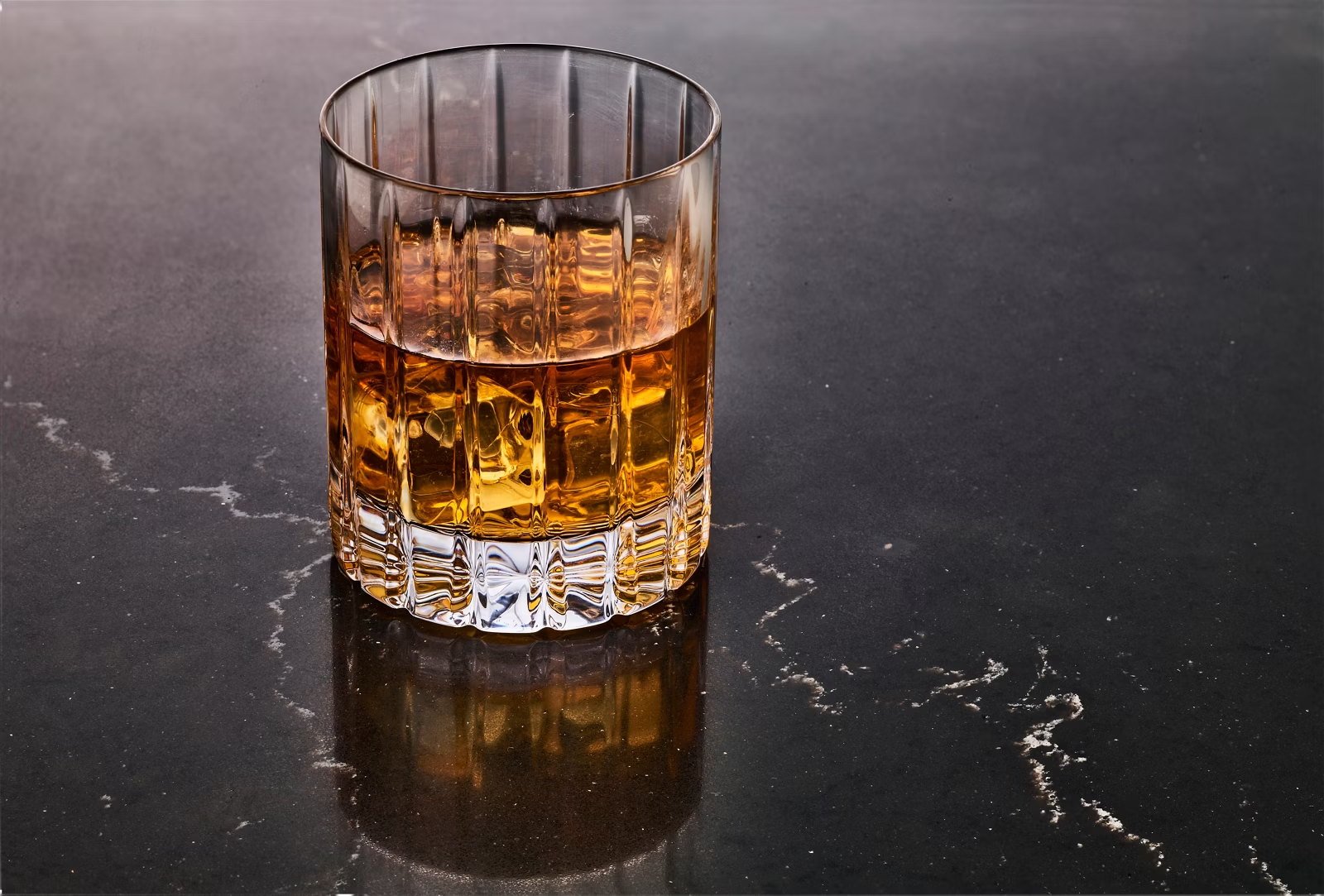
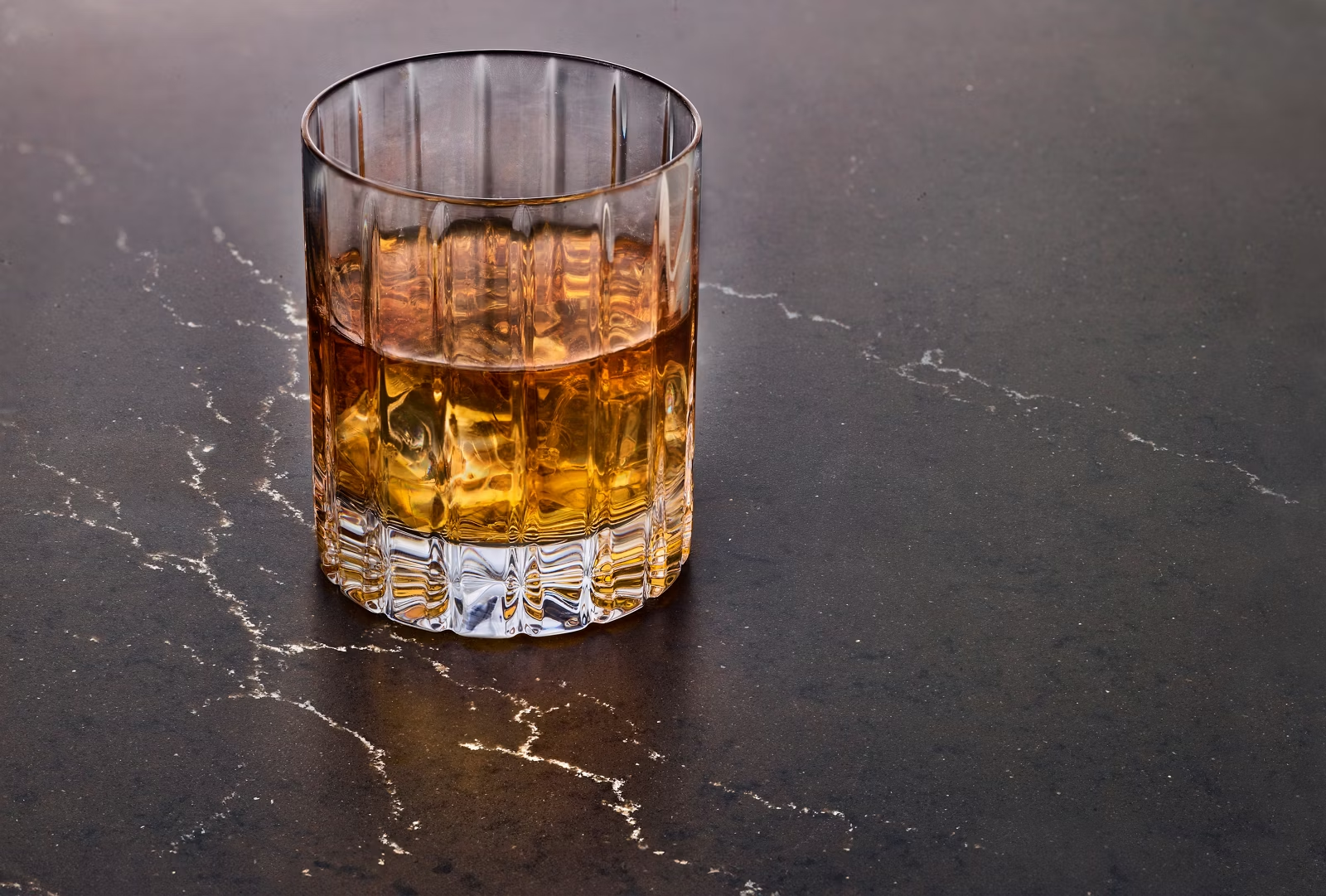
The same quartz design in two finishes: notice the glass’s reflection on the polished surface and the softer sheen on matte.
Cambria describes its matte finish as low-sheen with reduced glare, in contrast to polished quartz. Use the manufacturer’s finish comparison as a starting point, then see the surface in person.
Ask to compare the same design in both finishes when samples are available. Comparing a dark matte sample with a light polished one mixes together two decisions: color and finish.
- Lay the sample flat, as the countertop will sit, rather than judging it only on a vertical display.
- Look at it in daylight and under the lights you expect to use in the kitchen.
- Stand where you will prepare food, sit at the island and enter the room.
- Place cabinet, backsplash and flooring samples beside it.
- Decide whether you like the reflection itself, not just the pattern underneath it.
A photo can help you shortlist a look. Use a physical sample to make the finish decision.
Know your manufacturer’s finish names
A lower sheen and a textured surface are separate choices. These names describe specific manufacturers’ products; they are not interchangeable care or performance ratings.
- Cambria quartz: Cambria Matte® and Polished. Cambria’s Charlestown comparison shows the same design and glass in both finishes, making the reflection difference easier to see.
- Silestone by Cosentino: Polished, Suede and Volcano. Cosentino describes Suede as matte-looking and velvety, while Volcano has a rustic, rough texture. Confirm the finish offered for the specific design.
- HanStone quartz: Leathered has a soft matte texture and lower-gloss appearance. Its Riverwashed series has its own subtly textured matte surface. These are named finishes, rather than a single universal “matte” option.
- Vicostone quartz: the Pure White product page lists Polished and Honed; the Uliano product page lists Leather and Polished. Do not assume every design comes in every finish, or mistake a quartz design inspired by marble for natural marble.
The manufacturer examples include quartz products and Silestone, which Cosentino currently describes as a low-silica mineral surface. Verify the composition and care guide for your exact selection. Do not transfer these finish descriptions or care rules to natural stone, Dekton or porcelain. Confirm the actual material, design, finish and current local availability with your specialist.
Do not assume matte means mark-free
A quieter sheen does not guarantee less visible cleanup. Cambria’s matte guidance says normal use can leave surface markings; it recommends a soft cotton cloth, warm water and mild soap if desired.
Other manufacturers have their own qualifications. HanStone’s care and finish notes say certain colors with matte, leathered or river-washed finishes require additional attention and maintenance. They also caution that care advice for one quartz brand may not suit another.
Ask your showroom specialist to demonstrate the approved cleaning method on a suitable sample. Do not deliberately stain, scratch or heat a display. The useful question is whether the recommended daily routine suits you.
Separate durability from the appearance of wear
A visible mark and damage are not necessarily the same thing. For its own products, Cambria states that matte and polished finishes have the same scratch and chip resistance. Neither is scratch-proof, and that comparison is not a rating for every manufacturer’s matte surface.
Keep heat protection in the plan. Cambria’s product-care guidance recommends a closed-weave hot pad or solid trivet beneath hot cookware and heat-producing appliances. Choosing a finish does not remove that responsibility.
“Polished” is not an instruction to apply polish
The name describes the supplied finish. Cambria says its countertops do not require polishing or sealing in its product-care FAQ. Follow the selected manufacturer’s guide instead of adding a shine-restoring product because the countertop is called polished.
If an installed surface develops an unexpected dull patch or persistent mark, ask the supplier for product-specific guidance before attempting to change its sheen.
Put the finish on the order
Before approving the countertop, confirm:
- Exact selection: manufacturer, design name, finish and thickness.
- Sample match: whether the sample you reviewed represents the finish being ordered.
- Availability: whether that design and thickness can be supplied in your chosen finish.
- Finished details: what exposed edges and any backsplash pieces will look like.
- Price and timing: whether changing the finish changes the written quote or expected schedule.
- Daily care: which cleaning products and methods the manufacturer permits.
For the rest of the purchase, use our countertop quote checklist. Keep the finish decision specific rather than accepting an order that says only “white quartz.”
Compare your shortlist with Madison
Bring your cabinet sample, room photos and preferred countertop designs to Madison Sargent, a kitchen and bath designer based at Hannapel’s St. Joseph showroom. Ask which finish samples are available before your visit.
Explore Hannapel countertop options or request a consultation with Madison.