
Blog Posts
Semi-Custom vs. Custom Cabinets: When Is the Upgrade Worth It?
Semi-custom cabinets are often the right starting point when an available cabinet line can deliver your layout, finish, and storage plan. Fully custom cabinetry becomes worth comparing when specific dimensions, architectural details, or specialty pieces require too many compromises. Ask for both options on the same plan. The useful question is what the extra investment changes in your kitchen.
At Hannapel, that conversation can include KraftMaid and Dutchmaid, our fully custom cabinetry line. This is a comparison of two ways to plan and build a kitchen, rather than a claim that one label guarantees better construction.
If you are still evaluating the KraftMaid brand itself, our KraftMaid review covers that decision. Here, we focus on the point where a semi-custom design meets its limits—and when those limits matter enough to consider custom.
What does “semi-custom” actually mean?
Semi-custom cabinetry starts with a manufacturer’s catalog of cabinet types, sizes, door styles, finishes, and approved modifications. Your designer combines those options into a plan for your room. It is not the same as taking a prepackaged kitchen home from stock.
KraftMaid identifies itself as a semi-custom cabinet company and explains its sizing options in its cabinet-size guide. The practical takeaway is to check the current specification book for the exact cabinet and modification you need. Do not assume that every width, depth, or detail is available simply because the line is described as customizable.
Fully custom cabinetry develops the dimensions and details around the approved project. With Dutchmaid, Hannapel’s designer works through the plan and selections, and Dutchmaid builds the cabinetry for that plan. That flexibility still requires drawings, material decisions, and construction review before ordering.
Semi-custom vs. custom cabinets at a glance
| Decision | Semi-custom, such as KraftMaid | Fully custom, such as Dutchmaid |
|---|---|---|
| Dimensions | Catalog sizes and permitted modifications | Project-specific dimensions developed in the design |
| Appearance | Choose from the line’s door, material, and finish offering | Develop a coordinated package of door, wood, finish, and construction details |
| Storage | Select available drawers, organizers, and specialty cabinets | Plan specialty storage around particular objects, spaces, and uses |
| Best fit | The required layout works well within the available options | Specific fit or design requirements justify additional flexibility |
| Price comparison | Include modifications, finished panels, trim, and accessories | Price the same layout and finished scope to identify the actual difference |
| Timing | Confirm current production and delivery estimates | Confirm design approval, production, and delivery estimates |
Three situations where semi-custom can be enough
Your layout works without losing useful space. If the available cabinet sizes give you the drawers, pantry capacity, and appliance clearances you need, fully custom dimensions may not improve daily use. Look at the cabinet schedule, not just the rendering.
You find a finish and door style you genuinely want. A catalog choice is not a compromise if it is the right choice. Bring the door sample together with your flooring and countertop options before deciding that a custom finish is necessary.
The storage upgrades solve your actual problems. A well-placed trash pullout, useful drawer widths, or better pantry access may matter more than a special decorative feature. Prioritize the improvements you will use every day, then see which cabinet line delivers them.
When fully custom deserves a second quote
Custom is worth a serious look when the drawing exposes an important limitation. Examples include an unusually shallow built-in, a cabinet run that needs carefully balanced proportions, or coordinated kitchen and mudroom pieces with a specific visual relationship.
Ask your designer to point to the difference on the plan: Which cabinet changes? How much useful storage does it add? Does it improve an appliance fit, a sightline, or the way doors and drawers open? If the benefit cannot be explained clearly, revisit the reason for the upgrade.
Do not treat every filler panel as wasted money. Fillers and scribed pieces can provide clearance and accommodate uneven walls. Even a fully custom kitchen needs installation tolerances. The aim is a well-resolved layout, not eliminating every non-storage piece.
A tall pantry, inset door detail, or furniture-style island can be part of a custom discussion, but no label means “anything is possible.” Confirm the construction, finish, hardware, and approved dimensions with the designer and builder.
Does custom automatically mean better quality?
No. Custom describes the degree of tailoring. Quality depends on the actual materials, joinery, finish, hardware, design, and installation. Compare the specifications instead of using “custom” or “semi-custom” as a substitute for them.
At the showroom, open a drawer, examine how the door is made, and ask what materials are used in the box, back, shelves, drawer, and finished ends. Confirm which features are standard on the quoted line and which are upgrades. The display you are looking at may have a different specification from the starting quote.
Also review the written warranty and the process for reporting damaged or incorrect pieces. Avoid assuming that two products with similar warranty headlines cover the same things.
How to compare cabinet prices fairly
A price per linear foot or a sample 10-by-10 kitchen can help describe a package, but it does not price your kitchen’s storage and finish details. A bank of drawers, an appliance surround, and an open shelf arrangement use space differently and can carry different costs.
For a useful comparison, keep these items consistent:
- Layout: same room plan, appliance locations, cabinet count, and island scope.
- Storage: same drawer configuration, organizers, pullouts, and specialty accessories.
- Visible surfaces: door style, wood or other door material, finish, finished ends, panels, and interior finish where visible.
- Finishing pieces: crown, toe kick, fillers, decorative supports, and hardware.
- Services: design scope, delivery, installation, and any removal or repair work clearly identified.
- Other trades: countertops, plumbing, electrical work, flooring, and appliances listed separately if excluded.
There is no fixed percentage that custom must cost above semi-custom. A heavily modified semi-custom plan and a simpler custom plan may compare differently from their starting prices. Hannapel pricing is project-specific; ask for a current, itemized design proposal. For the wider project, see our Southwest Michigan kitchen remodel budgeting guide.
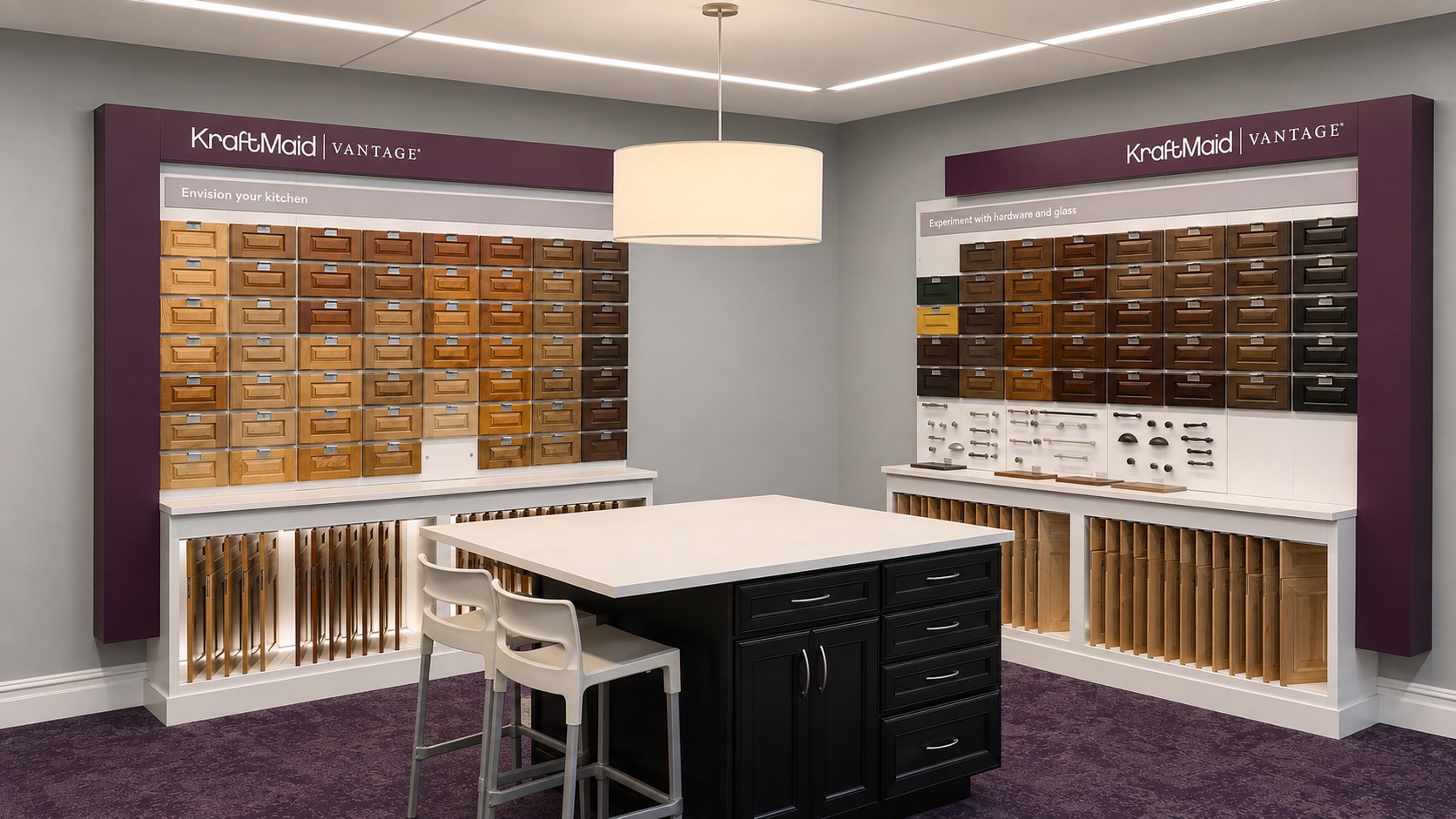
Before you commit, review the drawings
Walk through a normal day using the proposed plan. Where will the dishes land after unloading the dishwasher? Can you reach the items you use most? Do drawer fronts and appliance doors clear one another? Are the objects going into specialty storage measured?
Confirm appliance model numbers, final measurements, finish samples, hardware, and installation responsibilities before the order is released. Ask for current lead times for both lines rather than assuming semi-custom is always fast or custom always takes longer.
Compare two plans for the way you live
Bring room photos, rough measurements, appliance information, and a short list of storage problems. Terri can help you identify where a semi-custom cabinet line works and where a Dutchmaid custom solution would add something useful.
Explore Hannapel cabinetry, see Dutchmaid custom options, or visit the South Haven showroom. Request a design consultation and ask to work with Terri Yore.