
Blog Posts
How Much Does a Bathroom Remodel Cost in Southwest Michigan? (2026 Budget Guide)
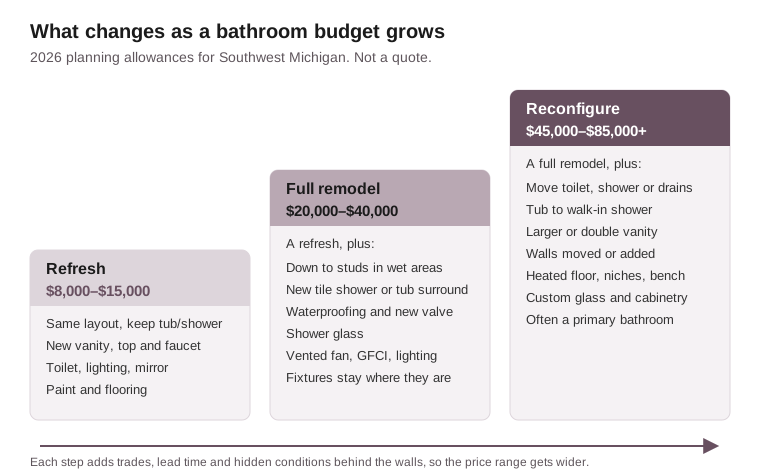
For early planning in Southwest Michigan, figure about $8,000–$15,000 to refresh a bathroom without changing its layout, $20,000–$40,000 for a full remodel with the fixtures staying where they are, and $45,000–$85,000 or more if you move fixtures, turn a tub into a walk-in shower or enlarge a primary bathroom.
For comparison, the 2025 Cost vs. Value report for our region (Michigan and the surrounding Great Lakes states) puts a midrange bath remodel at $24,910 and an upscale one at $78,684. These ranges are for planning, not quotes. Your written scope and the products you choose set the real number.
A bathroom is one of the smallest rooms in the house, so the price often surprises people. A lot of trades have to work in a very small space: plumbing, electrical, ventilation, waterproofing, tile, glass and cabinetry, often scheduled one after another. Per square foot, that usually makes a bathroom one of the most expensive rooms to remodel.
The good news is that the biggest price jumps come from a handful of decisions you can see coming. Here’s how our designers help homeowners set a bathroom budget before anything gets torn out.
2026 bathroom remodel costs in Southwest Michigan
| Project scope | Planning range | What’s typically included | Best for |
|---|---|---|---|
| Refresh | $8,000–$15,000 | New vanity and top, faucet, toilet, mirror, lighting, paint and flooring. The existing tub or shower stays. | A layout that works and a shower in good shape, just dated |
| Full remodel, same layout | $20,000–$40,000 | Everything in a refresh, plus a new tile shower or tub surround, waterproofing, shower valve, glass, a vented fan and electrical updates | Hall and guest baths, or a primary bath that’s the right size already |
| Reconfigure | $45,000–$85,000+ | Moving fixtures and drains, a tub-to-shower conversion, a larger or double vanity, moving walls, custom glass and cabinetry | Primary bathrooms, bathrooms that need to be accessible, and long-term homes |
Where your project lands within a range depends mostly on the size of the room, how much of it gets tiled, and what turns up once the walls are open.
Where a bathroom budget actually goes
Vanity and countertop
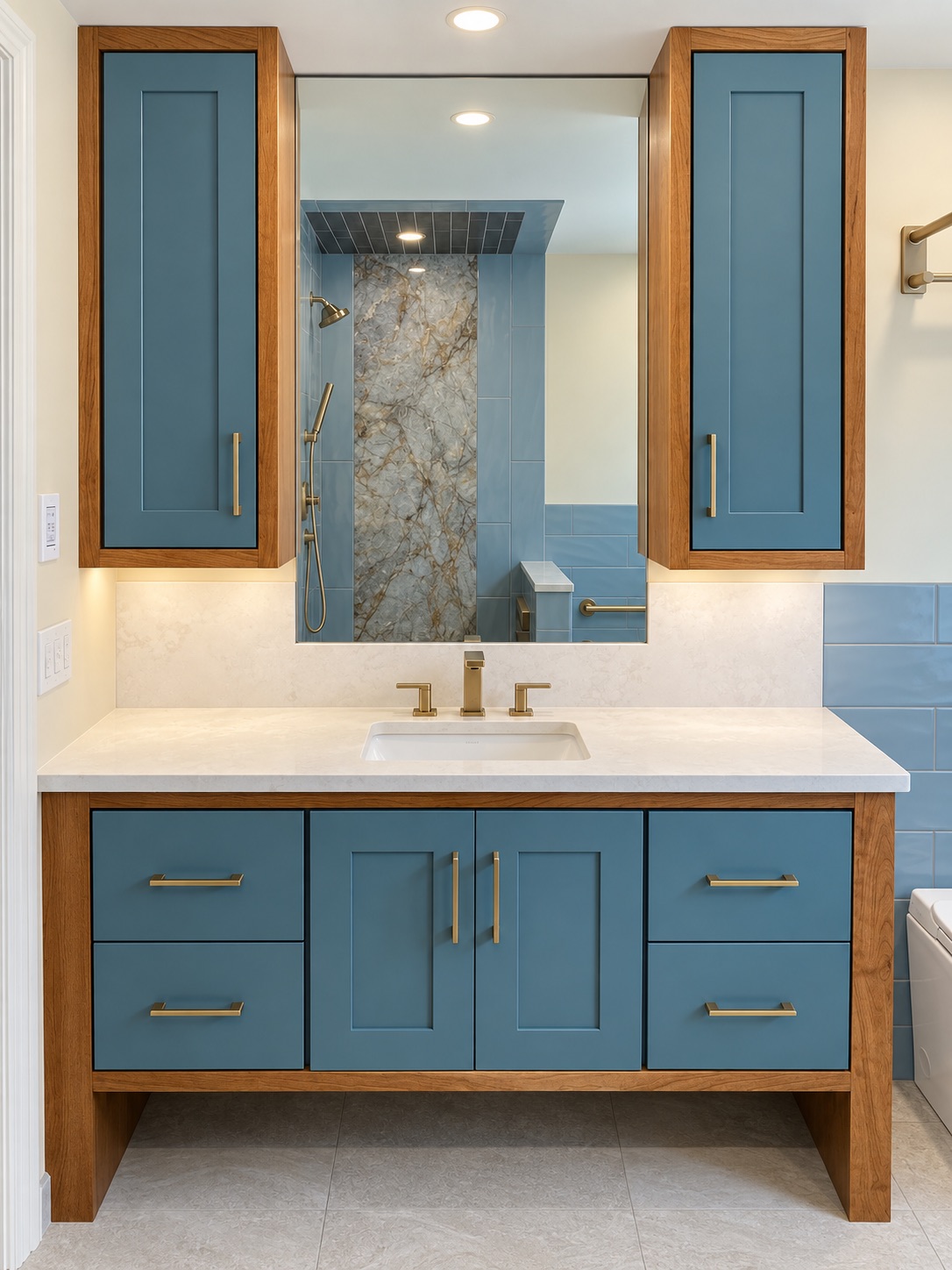
The vanity is often the biggest single product line in the budget, and one of the easiest to adjust. Standard widths cost less than custom sizes. Drawers cost more than doors, but they make a small vanity far more useful. Price the vanity, the top, the sink and the faucet together, since each one affects the others. Our vanity sizing guide covers measurements, and our vanity lineup shows the styles we carry.
Shower or tub
This is where the budget moves the most. A new tub with a tile surround, a tiled shower with a curb, and a curbless walk-in shower are three very different jobs. Custom glass, a built-in niche and a bench each add cost. The shower valve is the one piece that’s hard to replace later without opening the wall, so choose it carefully.
Tile, waterproofing and substrate
Tile is priced by the square foot, but the labor depends on the pattern and tile size. Herringbone, small mosaics and large-format tile that needs a perfectly flat floor all take longer to install. Ask what waterproofing system goes behind the shower tile. It’s covered up once the tile goes on, and it’s the part that protects your house.
Plumbing, electrical and ventilation
Replacing fixtures in the same spots costs far less than moving them. Most full remodels also update electrical to meet current code, including GFCI protection, lighting and sometimes a new circuit. The exhaust fan should vent outdoors, not into the attic. In Michigan winters, warm, moist air vented into the attic turns into frost and then water damage.
Contingency
Keep 10–15 percent of the budget in reserve, and more in an older home. You don’t know what’s behind a shower wall until it’s open.
The five decisions that move the price most
- Moving the toilet or shower drain. Moving a drain even a couple of feet can mean cutting into the floor, changing the vent piping and patching the ceiling below. If the current layout works, keeping it is the single biggest way to save.
- Turning a tub into a walk-in shower. It’s one of the most requested changes we see. A curbless version costs more because the floor usually has to be lowered so water drains without a curb to hold it in.
- How much tile, and what kind. Tiling to the ceiling, tiling the whole bathroom floor-to-ceiling, or using a complicated pattern can double the tile budget. One feature wall with a simpler tile elsewhere often looks better anyway.
- Vanity size and construction. Going from a single vanity to a double adds a second sink, faucet and drain, along with a larger top. Standard sizes and finishes are ready sooner than custom sizes.
- Glass. A framed or stock shower door costs much less than frameless glass cut to fit, and the custom glass is measured only after the tile is finished, which adds time to the schedule.
What’s different about remodeling a bathroom in Southwest Michigan
- Older homes hide surprises. Kalamazoo’s older neighborhoods and many of the small towns around it are full of homes that have had decades of repairs. Cast-iron drains, galvanized supply lines, plaster walls and floors that aren’t level are common, and each one can add cost once the walls are opened.
- Exterior walls and cold weather. Plumbing on an exterior wall can freeze here. Moving a shower or sink onto an outside wall should be a design decision you make on purpose, with insulation planned in.
- Lake and seasonal homes. Scheduling around the season, well water and older septic systems can all affect fixture choices and timing.
- Permits. Moving plumbing or adding circuits usually requires permits from your city, township or county building department. A good quote says who pulls the permits and whether their cost is included.
How to compare bathroom remodel quotes
Two quotes for “a new bathroom” can cover very different amounts of work. Before you compare prices, make sure each quote answers these questions:
- Is demolition and disposal included?
- What waterproofing system goes behind the shower tile, and does it include the floor?
- What brand and model is the shower valve?
- Is the tile an allowance per square foot, or a specific product? How many square feet does it cover?
- Is the glass framed, semi-frameless or frameless, and is it included?
- What electrical work is included: fan, GFCI, lighting, new circuits?
- Are drywall repair, paint and trim included?
- Who handles permits?
- How long will the bathroom be out of service, and when do the vanity and glass need to be ordered?
The same approach applies to countertops. See how to compare countertop quotes for what to ask about seams, edges and cutouts.
Bathroom remodel cost FAQ
Can I remodel a bathroom for $10,000?
Often yes, if the layout stays the same and the tub or shower stays in place. That budget usually covers a new vanity and top, faucet, toilet, lighting, paint and flooring in a small bathroom. It rarely covers a new tiled shower.
How long does a bathroom remodel take?
A refresh can take a week or two of work once the materials are in. A full remodel often takes three to six weeks on site, and longer if fixtures move or custom glass is involved. Order cabinetry and long-lead items before demolition starts so the room isn’t sitting torn apart while you wait.
Is a bathroom remodel worth it for resale?
According to the 2025 Cost vs. Value report for our region, a midrange bath remodel recouped about 71 percent of its cost at resale, and an upscale one recouped about 36 percent. The best reason to remodel is still how you’ll use the room. Resale is a secondary benefit.
What should I do first?
Decide whether the layout stays. That one decision sets which of the three ranges you’re in. After that, choose the vanity and shower, and let the tile and finishes follow.
Plan your bathroom budget with Jené
Jené Lawson is a kitchen and bath designer at Hannapel’s Kalamazoo showroom. She has more than 10 years of kitchen and bath design experience and a background in architectural planning. Bring measurements, photos and a rough budget, and she’ll help you figure out what to keep, what to change, and where spending more actually makes a difference.
Explore bathroom vanities and flooring and tile, or request a consultation with Jené. For the design side, read our bathroom planning guide.