
Blog Posts
Taos vs. Whistler: Andersen Patio Door Hardware
Choose Taos for a more geometric profile or Whistler for softer, curved lines. Introduced in 2026, these Andersen patio door hardware styles now share the same ten-finish palette. Start with the shape you like, compare finishes with the rest of the room, then confirm the right hardware for your specific door.
A patio door handle is a small part of a room, but it is a detail you see and touch every day. In an open kitchen or living area, it sits alongside cabinet pulls, faucets and lighting. The right choice should feel connected to those finishes and comfortable in everyday use.
Here is how Taos and Whistler compare, what the finish names mean, and what to bring when you visit Hannapel.
Taos or Whistler? Start with the shape.
Andersen shows both styles in gliding and hinged versions. A gliding door uses a pull handle; a hinged door uses a lever. Compare the version your project needs rather than assuming the pieces in a collection image are one complete kit.
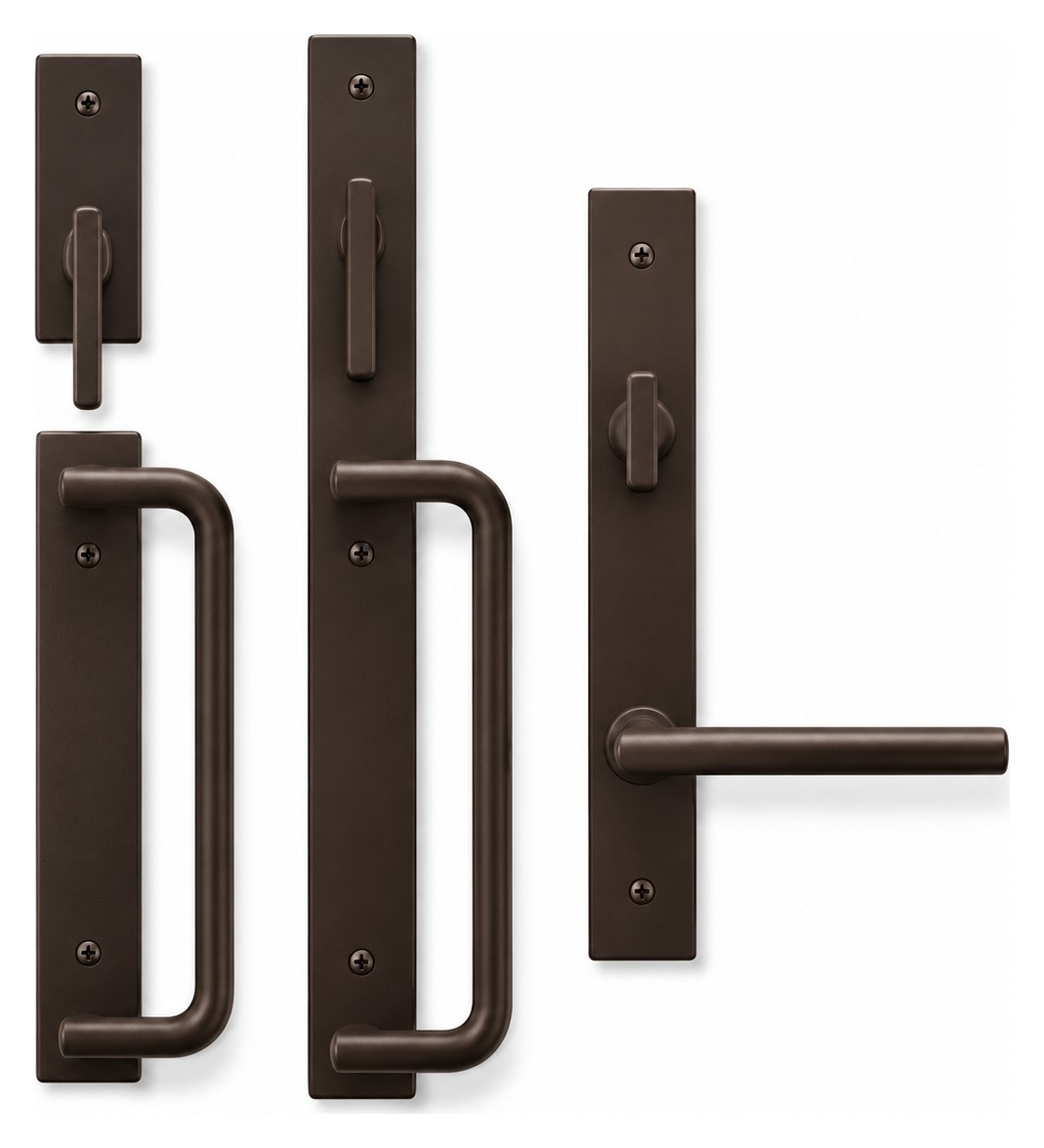
Taos: clean, geometric lines
Taos pairs rectangular backplates with a straightforward handle profile. The collection includes a one-piece interior backplate option, giving the handle and lock a continuous visual line.
Consider it with: simple cabinet pulls, clean-lined trim and rooms where you want the hardware to feel crisp and understated.
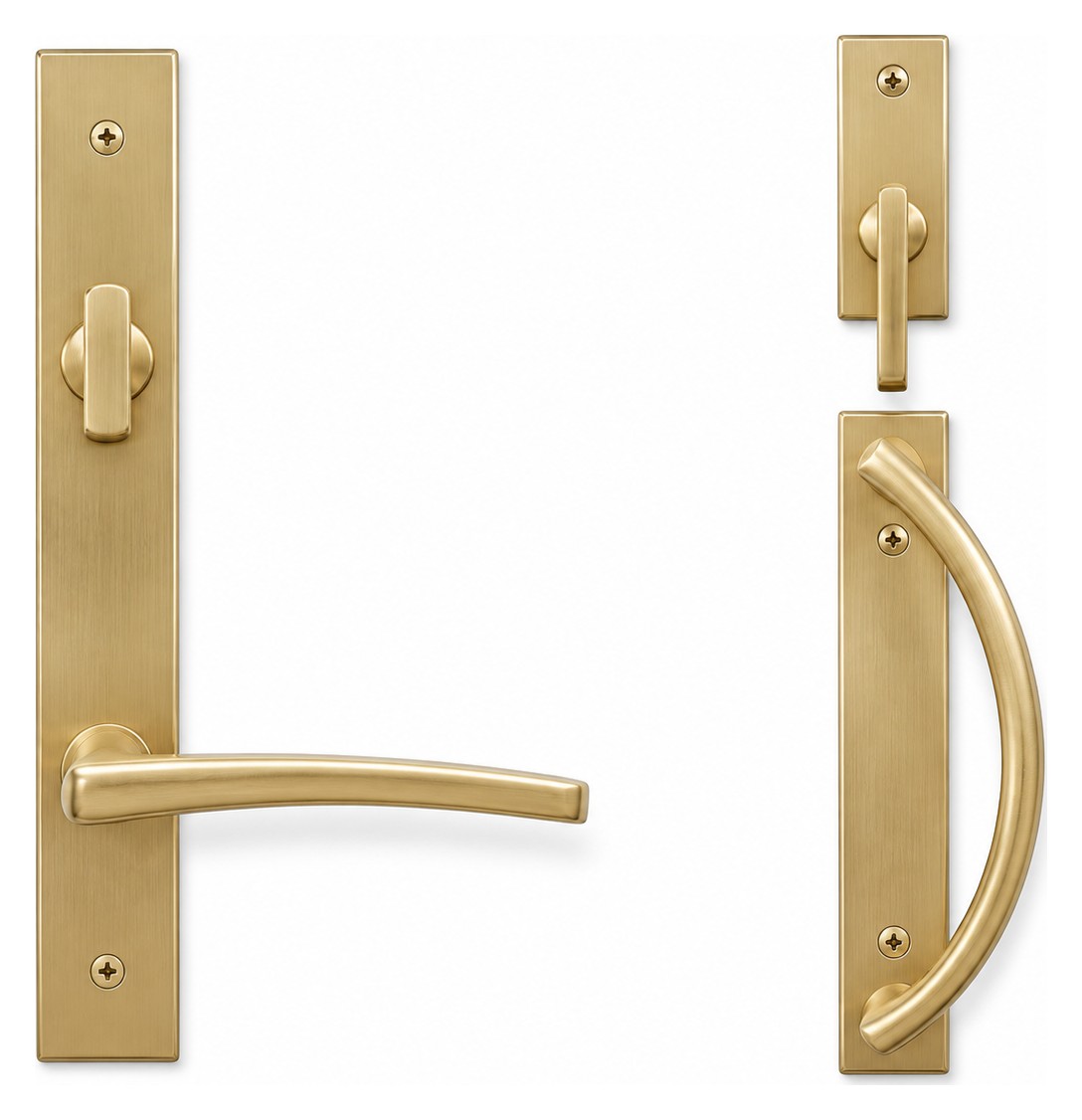
Whistler: a softer curve
Whistler brings a curved pull and gently shaped lever to a rectangular backplate. That curve gives the hardware a softer silhouette while keeping the overall design simple.
Consider it with: rounded cabinet pulls, arched details or a room that mixes traditional and contemporary elements.
Hardware images are Hannapel-generated illustrations based on Andersen references, for style comparison. Confirm finish and configuration with current product samples. Taos reference and Whistler reference images courtesy of Andersen.
Both styles offer ten finishes
You can choose the handle profile first without giving up your preferred color. Andersen currently lists the following finishes for both Taos and Whistler:
- Antique Brass
- Black (Matte)
- Graphite Gray
- Matte Bronze
- Oil Rubbed Bronze (Living Finish)
- Polished Chrome
- Sand
- Satin Brass (PVD Finish)
- Satin Nickel (PVD Finish)
- White
See the current options in Andersen’s patio door hardware collection. Availability still needs to be confirmed for the door and hardware configuration you are ordering.
Choose a finish in the context of the room
- For a quiet look: start with a finish close to the door or trim color. White, Sand and the darker neutrals are useful starting points.
- For contrast: compare Black (Matte) against a light door or a lighter metallic finish against a dark frame.
- For warm tones: compare Satin Brass, Antique Brass and the bronze options with nearby wood, lighting and cabinet hardware.
- For silver tones: compare Satin Nickel and Polished Chrome. Pay attention to the difference between a softer sheen and a polished reflection.
Your metal finishes do not all need to match. Bring a cabinet pull, a finish sample or photos of nearby fixtures, and look for a combination that feels intentional. Check samples in daylight and in your evening lighting before deciding.
Understand the finish labels
Oil Rubbed Bronze is a living finish: its appearance changes with handling and use. Choose it with that evolving character in mind. Satin Brass and Satin Nickel are identified as PVD finishes by Andersen; PVD describes the finish process, not a separate color. Follow the care guidance for the finish you select.
Replacing hardware? Identify the door first.
Taos or Whistler may be worth exploring for a hardware refresh, but the style name alone does not establish fit. Confirm the door series, manufacturing date, operation and required components before placing an order.
Andersen’s gliding hardware identification guide explains why series and age matter. Flush hardware is a particularly important exception: doors manufactured for flush hardware use a different system and should not be treated as interchangeable with standard gliding hardware.
Bring these details to Hannapel
- Photos of the full door, inside and outside. Include the frame and all panels.
- Close-ups of the current handle, lock and door edge. Show any damaged or missing parts.
- Product identification markings. Photograph any labels or etched information you can find, and note the approximate installation year.
- Your preferred style and finish. Save Taos or Whistler and one or two finish choices from the Hannapel hardware catalog.
Ask what the quoted set includes: interior and exterior pieces, locking components and any separate parts your door requires. If the door is hard to slide or the lock does not engage properly, mention that too so the conversation addresses the operating issue as well as the appearance.
Planning a new patio door?
Choose the door operation and panel arrangement before finalizing hardware. Think about the route to the patio, the space around the handle and how the screen and lock work together. Our patio door configuration guide explains the differences between common two-, three- and four-panel arrangements.
When you can, try the handle and lock on a showroom display. Look at the finish from across the room as well as close up. A choice that photographs well should also work for the way your household uses the door.
Compare your options with Rusty
Whether you are choosing a new patio door or updating an existing one, Rusty Cutter can help you work through the style, finish and fit questions. Bring your door photos and nearby finish samples to your Hannapel conversation.
Request a consultation with Rusty, browse our patio doors, or find a Hannapel showroom.
Product information checked against Andersen’s current hardware collection and identification guide on November 11, 2026. Hero photograph courtesy of Andersen; shown for patio-door inspiration, not as a Taos or Whistler installation.